Classroom Social Media Templates: A Modern Learning Tool
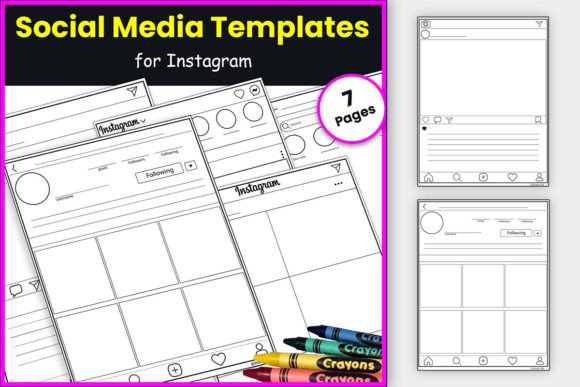
In a digital-first world, meeting students where they are is the cornerstone of effective education. The concept of Social Media Templates for Classroom use isn't about encouraging kids to scroll through TikTok during class; it is about leveraging the visual language they understand to deepen comprehension and engagement. For educators, instructional designers, and content creators, these resources represent a shift from passive learning to active, creative participation. By mimicking the interface of popular platforms like Instagram, these templates transform standard assignments into dynamic, interactive projects.
The Visual Language of Modern Education
At its core, this resource functions as a premium font of visual communication. The "personality" of these templates is distinctly modern, clean, and intuitive. They typically feature a display font style that mimics the bold, sans-serif typography of major social media apps, ensuring instant recognition for students. The aesthetic relies heavily on whitespace, grid-based layouts, and distinct UI elements like "like" buttons, comment sections, and caption areas. This modern typography approach ensures that the focus remains on the student's content—whether it is a historical analysis or a scientific diagram—rather than on distracting design elements.
The versatility of these design assets is where their true power lies. While the primary audience is the classroom, the applications extend into broader educational marketing and curriculum development. Think of these templates as a flexible typeface for ideas. They work exceptionally well for:
- Interactive Bulletin Boards: Creating a physical "feed" in the hallway where students display their work.
- Digital Portfolios: Allowing students to curate their best work in a familiar format.
- Project-Based Learning: Using the "post" format to summarize complex topics like the water cycle or historical timelines.
- Collaborative Learning: Encouraging peer-to-peer feedback using the "comments" section of the templates.
This approach to editorial design bridges the gap between the classroom and the digital world, making learning relevant and accessible.
Practical Application: From Theory to Practice
Implementing Social Media Templates for Classroom environments requires a strategic approach to maximize student engagement. It is not enough to simply hand out worksheets that look like Instagram profiles; the assignment must utilize the format to enhance the subject matter.
For instance, in a history class, students can use the template to create a "profile" for a historical figure. This moves beyond standard biographies by asking students to consider the figure's "voice," their "followers" (allies), and their "posts" (key life events). In literature, students can map a character's emotional arc by creating a series of "posts" or "stories" that reflect their changing perspective throughout a novel. This method encourages critical thinking about narrative structure and character motivation in a way that traditional essays often miss.
For science and math, these templates offer a unique way to visualize abstract concepts. A student might create a "post" explaining a complex formula, using the caption space to break down the steps in simple, accessible language. This forces the student to distill complex information into its most essential components—a key skill in both STEM fields and web design. The visual nature of the template also lends itself well to packaging design principles, where students must present information clearly and attractively within a defined space.
Design Considerations for Educators and Creators
When selecting or creating these templates, several design factors come into play. The choice of typography, for example, can significantly impact the tone of the assignment. A handwritten font might be suitable for a creative writing prompt, while a clean sans serif font is better for scientific data visualization. The goal is to choose a typeface that supports the learning objective without overwhelming the content.
Accessibility is another critical consideration. The templates should have sufficient contrast and legible text sizes to ensure all students can participate. This is where the principles of readability and visual hierarchy come into play. The most important information—the student's core message—should be the focal point, supported by the familiar UI elements of the social media format.
Furthermore, these resources are invaluable for brand identity in educational settings. Schools and districts can use customized versions of these templates to create a consistent visual language for student projects, newsletters, and social media announcements. This consistency builds a sense of community and professionalism, much like a strong logo design unifies a company's image.
Beyond the Classroom: A Tool for Modern Communication
While the primary focus is education, the underlying principles of Social Media Templates for Classroom use have broader implications for anyone involved in content creation. The ability to distill complex information into a visually engaging, bite-sized format is a valuable skill in marketing, blogging, and social media graphics. These templates teach a fundamental lesson in modern communication: clarity, brevity, and visual appeal are not just stylistic choices; they are essential tools for connecting with an audience.
Ultimately, these templates are more than just a fun activity. They are a practical tool for developing critical 21st-century skills—digital literacy, visual communication, and creative expression. By integrating them into the curriculum, educators are not just teaching subject matter; they are teaching students how to think, create, and communicate in the language of the modern world.